MCC clarifies Law relating to breaking the wicket for a run out
Read story
Make the most of your visit to the Home of Cricket. Whether you’re joining us for a match, a tour, or an event, you’ll find essential information on travel, facilities, and experiences right here.
Scan the QR codes around the Ground and follow our Heritage Trail to learn more about Lord's. Plan your visit below.

We’ve got a wide variety of formats covered with an exciting line up of matches to get your cricket fix.
Whether you like red or white ball, domestic or international, or men’s or women’s cricket, Lord’s will have the perfect cricket experience for you, your family and friends.
There's Nothing Like This

Take your Lord’s experience to new levels with our collection of premium hospitality experiences. From world-class matchday dining to exclusive behind-the-scenes access and private events, experience the heritage and atmosphere of the Home of Cricket in the ultimate style.

Train, play and refuel at the Vitality Performance Centre - home to indoor cricket coaching, personal training, group classes, HOAM café and our specialist cricket shop.
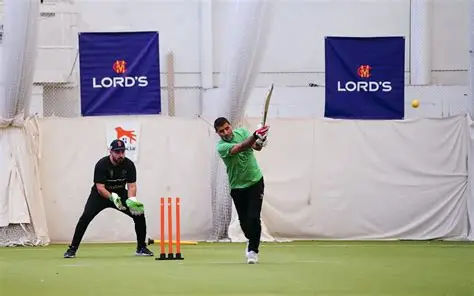
Marylebone Cricket Club is the world’s most active cricket club, the owner of Lord’s Ground and the guardian of the Laws of the game. Find out more about the history of MCC, our work in the Community and the famous Lord's Museum.
FIND OUT MORE

Posted: 30 April 2026
Raghuvanshi set off for a quick single and was sent back by his partner. He turned, dived to make good his ground, and was hit by the ball as the throw came in. There was an appeal, and on review, the third umpire gave him out Obstructing the Field. So what do the Laws say?
Law 37.1.1 says that either batter is out Obstructing the Field if they “wilfully attempt to obstruct or distract the fielding side by word or action.” That means that the obstruction must be deliberate, which can be hard to determine.
There has long been an interpretation on this exact matter, where a batter is running as the throw comes in – it is published in Tom Smith’s Cricket Umpiring and Scoring, MCC’s Official Interpretation of the Laws of Cricket, and has been accepted for many years.
It states: “a batter who changes direction while running, particularly one who changes direction to run on the pitch, or takes any other route that would not be the quickest way to the other end, is making a wilful act.”
Raghuvanshi clearly meets these criteria. When he sets off for his run, he is on the off side of the wicket. As the ball reaches the fielder he crosses to the middle of the pitch – which is not somewhere he should be running in any event – and then turns and runs back on the leg side, putting himself between the ball and the wicket. This is, by definition, a wilful act. Had he stayed off the pitch, remaining on the off side, the ball would not have hit him and even there would have been no question of an obstruction. If he had started running down the leg side, then turned and returned to his ground on that same side before being hit by the ball, that would also see him being Not out - he would have been in the way, but not wilfully. It is the wilful crossing of the pitch that caused his downfall.
There has been some suggestion that Raghuvanshi should not have been given out because he would have made his ground even if the throw had not hit him. However, this is not a consideration. Provided the obstruction is not to prevent a catch being taken, whether a dismissal was likely is not a criterion in Obstructing the field.